
 English
 Español
 Pусский
 Français
 Deutsch
 日本語
日本語 العربية
 Türk dili
 Indonesia
PLA CF Composite
PLA CF Composite is a bio-based composite material that combines polylactic acid (PLA) with carbon fiber (CF) reinforcement to create a lightweight, strong, and more sustainable engineering material. It is designed to deliver improved mechanical performance compared with neat PLA while retaining many of the processing advantages associated with thermoplastic polymers. Because of this balance between performance and manufacturability, PLA CF composite is increasingly used in applications that require a combination of stiffness, reduced weight, and a more environmentally conscious material choice.PLA is derived from renewable resources such as corn starch, sugarcane, or other plant-based feedstocks. It is known for its biodegradability under industrial composting conditions and its relatively low environmental impact compared with many petroleum-based plastics. However, pure PLA has limitations, including moderate brittleness, limited heat resistance, and lower impact strength. By incorporating carbon fiber, these weaknesses can be significantly reduced. Carbon fiber acts as a high-strength reinforcement phase that improves tensile strength, flexural strength, dimensional stability, and stiffness. The resulting composite can better withstand mechanical loads and maintain its shape under demanding conditions.One of the key advantages of PLA CF composite is its high strength-to-weight ratio. Carbon fiber provides substantial reinforcement without adding much mass, making the material suitable for lightweight structures. This is especially valuable in industries where weight reduction is important, such as transportation, consumer products, robotics, sporting goods, and industrial components. A lighter part can contribute to energy savings, easier handling, and improved performance. In addition, the composite can offer better vibration damping and enhanced surface quality compared with some traditional engineering plastics.From a processing perspective, PLA CF composite can often be manufactured using conventional thermoplastic methods such as injection molding, extrusion, and additive manufacturing. Its compatibility with 3D printing is particularly attractive because carbon fiber reinforcement can improve print rigidity and dimensional accuracy. This makes it useful for prototypes, custom parts, jigs, fixtures, and functional components. Depending on the fiber length, content, and processing conditions, the material properties can be tailored for specific applications. Short carbon fiber versions are common in molded parts, while longer reinforcement can provide higher performance in more specialized products.Despite its benefits, PLA CF composite also has certain limitations. The addition of carbon fiber can reduce ductility and make the material more brittle if not properly formulated. It may also increase abrasiveness during processing, which can cause wear on equipment. Furthermore, while PLA is bio-based, the presence of carbon fiber means the overall composite is not fully biodegradable in the same way as pure PLA. As a result, end-of-life handling should be considered carefully. Recycling options may vary depending on the composite formulation and local infrastructure.Overall, PLA CF composite represents an important step toward combining sustainability with advanced material performance. It offers a practical solution for applications that need lightweight strength, improved rigidity, and efficient processing. As material science continues to evolve, PLA CF composite is likely to play an expanding role in the development of innovative, high-performance, and more environmentally responsible products.
产品
分类:
-
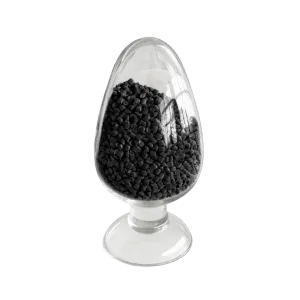
PLA CF Compound
所属分类: Modified Material浏览次数: 11编号:发布时间: 2026-10-09 19:10:55●Antistatic, glass fiber reinforced or carbon fiber reinforced PLA grades. High rigidity with ESD protection, for 3D printing and structural parts.
新闻
分类:
暂无搜索结果!
案例
分类:
暂无搜索结果!
视频
分类:
暂无搜索结果!
下载
分类:
暂无搜索结果!
招聘
分类:
暂无搜索结果!
推荐产品
暂无搜索结果!



 电话
电话